A First Project Handoff, Made Legible
A creative project handoff makes the next contribution easier: show what to open, what can change and where the incoming collaborator can add their work.
How do you make a creative project handoff useful without turning it into a history lesson? A creative project handoff should help the incoming collaborator find the work, understand its shape and see where their contribution can fit.
That last point matters. A handoff is not only a status report; it is an invitation into the work. Show the new person what is already there, what kind of contribution is welcome and how to share it without disturbing someone else’s part.
How can a creative project handoff make room for contribution?
Begin with the recipient’s role, not with every detail the outgoing person remembers. A copywriter joining a short film project may need the current cut, the intended audience and the scenes awaiting narration. They probably do not need a transcript of every early brainstorm.
Give the recipient a clear way to contribute. Say whether they should edit the shared script, leave comments, make a separate draft or bring options to the group. This small instruction prevents a well-meant contribution from overwriting work that someone else is still shaping.
What should the incoming collaborator be able to find?
Point directly to the few materials that make the work legible. Use the project’s shared folder, Notion space, Google Drive or other agreed workspace, and link to the active file rather than a folder full of similarly named drafts.
For each link, explain what it contains and how it is meant to be used. “Current script: add comments in suggestion mode” is clearer than “Here are the docs.” If an older draft is useful for context, label it as reference so it is not mistaken for the live version.
- Active material: Check that the link opens the file the collaborator should use; if it does, name the intended way to contribute, but if it does not, replace it with a working link.
- Context: Check whether the purpose and audience are clear; if they are, keep the note brief, but if they are not, add the missing context before asking for creative input.
- Boundaries: Check which parts are fixed and which can change; if a boundary is agreed, state it plainly, but if it is uncertain, ask the project owner before presenting it as settled.
- Contribution route: Check whether the recipient knows where to add ideas; if the route is clear, identify it, but if it is not, choose a shared document, comments or a separate draft and say which.
- People: Check who can answer questions or approve a change; if that person is known, name them, but if not, identify the team channel or arrange a point of contact.
- Next contact: Check when the incoming person should share their contribution; if there is an agreed review moment, include it, but if not, ask the team to set one rather than leaving the timing implicit.
How do I distinguish fixed material from creative space?
Mark the difference between a constraint and an invitation. “Keep the event date and venue details unchanged” sets a boundary; “try a warmer opening if it suits the audience” offers room to interpret. Avoid calling something approved if it is only a preference voiced in conversation.
Be specific about the kind of change that is welcome. “Make the ending stronger” leaves the recipient guessing. “Try an ending that gives the audience one clear action, while keeping the closing image” gives them a direction and a piece of material to preserve.
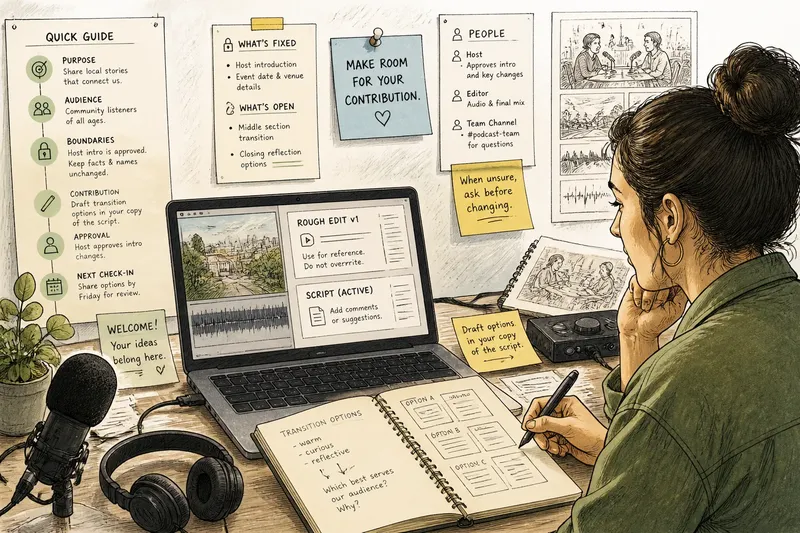
Say you are handing a fictional community podcast episode to a new producer. The shared folder contains a rough edit and a separate transcript; the host’s introduction is approved, while the middle section needs a clearer transition. You link to the rough edit, ask the producer to draft transition options in a copy of the script, and note that the host can approve changes to the introduction. The producer can contribute an edit without altering the settled opening or overwriting the source.
What details help a new collaborator make good choices?
Share the purpose, intended audience and any constraint that shapes the work. A person preparing captions for a museum video needs to know whether the language should speak to school groups, adult visitors or both. They also need practical boundaries, such as a supplied house style or an agreed term that must remain consistent.
Explain why a boundary exists when the reason will guide decisions. “Use the supplied typeface” is clear; “use the supplied typeface because the venue’s signage uses it” helps the designer make related choices with confidence. Keep the explanation short and relevant.
When the answer is not known, say so. A new collaborator can often suggest a useful option, but they should not have to guess whether they have authority to settle it.
What questions do new collaborators often ask?
Should I edit the original file?
Use the original only if the project owner has invited direct editing and the file’s history or version controls are clear. Otherwise, work in suggestion mode or make a labelled copy so the source remains intact.
How much project history should I include?
Include background that explains the audience, a constraint or a choice the recipient may need to build on. Put longer discussion in a clearly named reference note, and link it only when it will help with the contribution.
What if I disagree with a settled choice?
Keep the agreed version intact and explain your alternative as a suggestion, with the reason it might better serve the work. Ask the named decision-maker to reopen the choice rather than silently changing the shared material.
How should I send early creative ideas?
Use the route the handoff specifies, and label rough ideas as proposals rather than finished work. A short note about what each option is trying to achieve helps the team respond to the idea rather than guess at your intent.
What is not worth adding to a handoff?
It is not worth polishing the note into a second project document or attaching every abandoned idea. A plain message with working links, clear boundaries and a contribution route is easier to use than an elaborate account that competes with the work itself.
Before sending, check the handoff from the incoming collaborator’s point of view: can they open the right material, see where they may contribute and tell whom to ask about a boundary? A creative project handoff works best when it makes the next contribution possible while leaving the existing work easy to recognise.